Working with Professional Raptors on Set
From majestic eagles soaring across dramatic landscapes to hawks perched on the arm of a medieval character, birds of prey have a unique ability to bring scale, drama and authenticity to film and television productions.
Raptors are visually striking, intelligent and highly skilled animals, making them particularly memorable on screen. Whether a production requires an eagle for a sweeping cinematic shot, a falcon for a period drama or an owl for a mysterious scene, working with professionally trained birds of prey can create spectacular results.
At The Animal Talent Ltd, we understand that working with animals on a film or television set requires specialist knowledge, careful planning and, above all, a commitment to animal welfare.
Why Are Birds of Prey So Popular on Screen?
Birds of prey have been associated with humans for centuries, particularly through falconry, mythology, royalty and hunting traditions. This gives them a natural place in many different types of productions.
They can be used in:
- Feature films
- Television dramas
- Period productions
- Fantasy and adventure films
- Documentaries
- Advertising campaigns
- Music videos
- Editorial and fashion shoots
- Historical productions
- Children’s television
A raptor can immediately establish a character, location or period. A falcon carried by a medieval nobleman, for example, can communicate wealth and status without the need for dialogue.
An owl appearing in a woodland scene can create an entirely different atmosphere, while a hawk or eagle flying through a landscape can provide an impressive establishing shot.
Which Birds of Prey Can Be Used in Film and TV?
The type of bird required will depend on the script, visual requirements and the behaviour needed for the scene.
Professional animal handlers may work with a range of raptors and some of the most popular include:
Hawks
Hawks can be particularly versatile for film and television. Depending on the individual bird and its training, they may be able to perform behaviours such as perching, flying between designated locations and flying to a handler.
Falcons
Falcons have a long association with falconry and are particularly useful for period productions. Their elegant appearance makes them excellent choices when a production wants to recreate historical scenes involving hunting or nobility.
Eagles
Eagles are among the most visually impressive birds of prey. Their size and presence can make them ideal for dramatic cinematic work, although their specialist requirements mean that careful planning is essential.
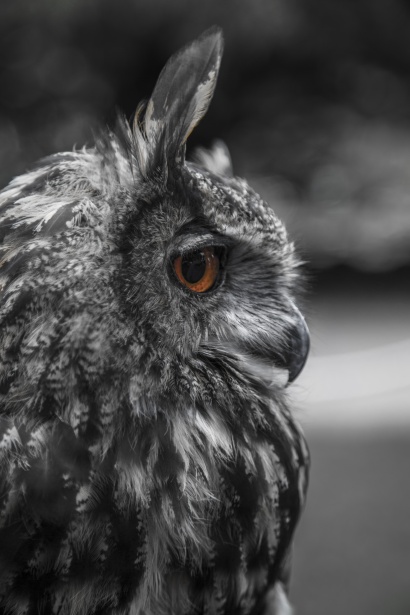
Owls
Their distinctive appearance makes them popular for fantasy, period drama and atmospheric scenes.
Other Raptors
Depending on the production and the requirements of the scene, professional handlers may also work with other species of hawk, falcon and owl.
The most important consideration is not simply the species; it is the individual bird.
Every animal has its own personality, abilities, confidence levels and limitations. A professional animal trainer will select a bird that is genuinely suitable for the work required.
Training a Bird for Film and Television
Training a bird of prey for a production is very different from simply having a bird that is accustomed to people.
Film sets can be busy, unpredictable environments. There may be cameras, lighting equipment, sound equipment, crew, actors, vehicles and unfamiliar locations.
A professionally trained bird needs to be comfortable enough with its handler and surroundings to perform the required behaviour safely and reliably.
Depending on the individual bird, training might include:
- Remaining calmly on a perch
- Flying to a handler
- Flying between designated perches
- Flying on cue
- Remaining settled around production equipment
- Working around appropriate actors and crew
- Becoming accustomed to different environments
- Performing specific behaviours required by the script
Training should always be appropriate to the individual animal. The aim is to create a bird that is confident and comfortable rather than forcing an animal to perform.
Animal Welfare Comes First
Working with birds of prey requires specialist knowledge, and welfare must always take priority over the shot.
Raptors have very specific physical and environmental requirements. Factors such as temperature, weather, noise, lighting, location and the length of time an animal is required on set all need to be considered.
A professional handler should monitor the bird throughout the production and be prepared to stop or change a scene if the animal is showing signs that it is uncomfortable, stressed or unsuitable for the conditions.
This is particularly important when working outdoors.
Heat, strong winds, rain and extreme weather can all affect birds differently. A responsible animal talent provider will assess the conditions and make decisions based on the welfare of the individual bird.
The Importance of a Professional Handler
A trained bird of prey should never simply be brought onto a set and expected to behave like a prop.
The handler is responsible for understanding the bird’s behaviour, recognising its signals and making sure that the production environment is appropriate.
They will also work with the production team to establish how the bird will be used and what the scene involves.
Good communication before filming is essential.
The animal talent agency should know in advance:
- What the bird needs to do
- Where filming will take place
- Whether the scene is indoors or outdoors
- How many crew members will be present
- Whether actors will interact directly with the bird
- Whether other animals will be on set
- What props or equipment will be used
- Whether there are special effects
- How long the animal is expected to be required
The more information available before filming, the better the team can prepare.
Birds of Prey and Actors
When an actor is required to interact with a bird of prey, preparation is particularly important.
Actors may need to hold a bird, have it land on a suitable perch, walk with it or appear to interact with it during a scene.
The actor should be properly briefed by the professional handler, and the bird should never be placed in a situation simply because it looks good on camera.
Sometimes the safest and most effective approach is to film the interaction in stages, using camera angles and editing to create the finished sequence.
The welfare of both the animal and the actor should always be considered.
Creating the Perfect Shot
One of the advantages of using professionally trained animal talent is that the handler can work with the director and production team to achieve the desired shot while keeping the animal’s needs in mind.
For example, a scene might require a bird to:
Fly towards an actor → land on a designated perch → remain still → fly away on cue.
The final sequence may look effortless on screen, but achieving it can require considerable preparation.
Animals do not perform on demand in quite the same way as human actors. Patience, timing and flexibility are essential.
A good production understands that sometimes the animal will give you something even better than the original plan!
Real Birds or CGI?
Modern visual effects can create incredibly convincing digital animals, but there are occasions when nothing quite matches the presence of a real bird.
A real raptor brings natural movement, feathers, expressions and behaviour that can be difficult to replicate digitally.
For productions where authenticity is important, a professionally trained bird can make a significant difference to the finished result.
That does not mean every scene requires a live animal. CGI, animatronics and visual effects can all have their place, particularly where a scene would not be suitable for a real animal.
The right choice depends on the production, the script and the welfare considerations involved.
Planning Is the Key to a Successful Animal Shoot
The best animal shoots are planned well in advance.
Birds of prey require specialist equipment, experienced handlers and carefully considered working conditions. Last-minute changes can make an otherwise straightforward scene considerably more complicated.
Production teams should discuss animal requirements with their animal talent provider during pre-production rather than waiting until the day of filming.
This allows everyone to establish:
- The exact behaviour required
- Suitable locations
- Safe working areas
- Appropriate rest arrangements
- Weather considerations
- Actor interaction
- Camera positions
- Crew requirements
- Backup plans
Good planning makes the shoot safer, calmer and more efficient for everyone involved.
Why Choose Professional Animal Talent?
When your production needs a bird of prey, experience matters.
A professional animal talent agency can help identify the right animal for the role, understand the practical requirements of the shoot and coordinate with handlers and production teams.
At The Animal Talent Ltd, our focus is on providing professionally trained animals for film, television, advertising and other productions, while ensuring that animal welfare remains at the heart of every booking.
Whether you need a majestic bird of prey for a feature film, a falcon for a period drama, an owl for an atmospheric television scene or a trained raptor for an advertising campaign, choosing the right animal and the right professional team can make all the difference.
Looking for Birds of Prey for Your Production?
If your next production requires a professionally trained bird of prey, The Animal Talent Ltd can help you find the right animal talent for your project.
From initial casting and planning through to filming, professional animal handling ensures that your production can achieve impressive results while putting the welfare of the animal first.
Looking for a bird of prey for film, television or advertising? Get in touch with The Animal Talent Ltd to discuss your requirements.